Case Studies

THE ENGINEERING BEHIND THE OUTCOME.

Three real projects. The challenge, the constraints, the engineering decisions, and the measurable results. No customer names — just the work.

Robotic AutomationGeneral Manufacturing

Vision-Guided CNC Machine Tending Cell

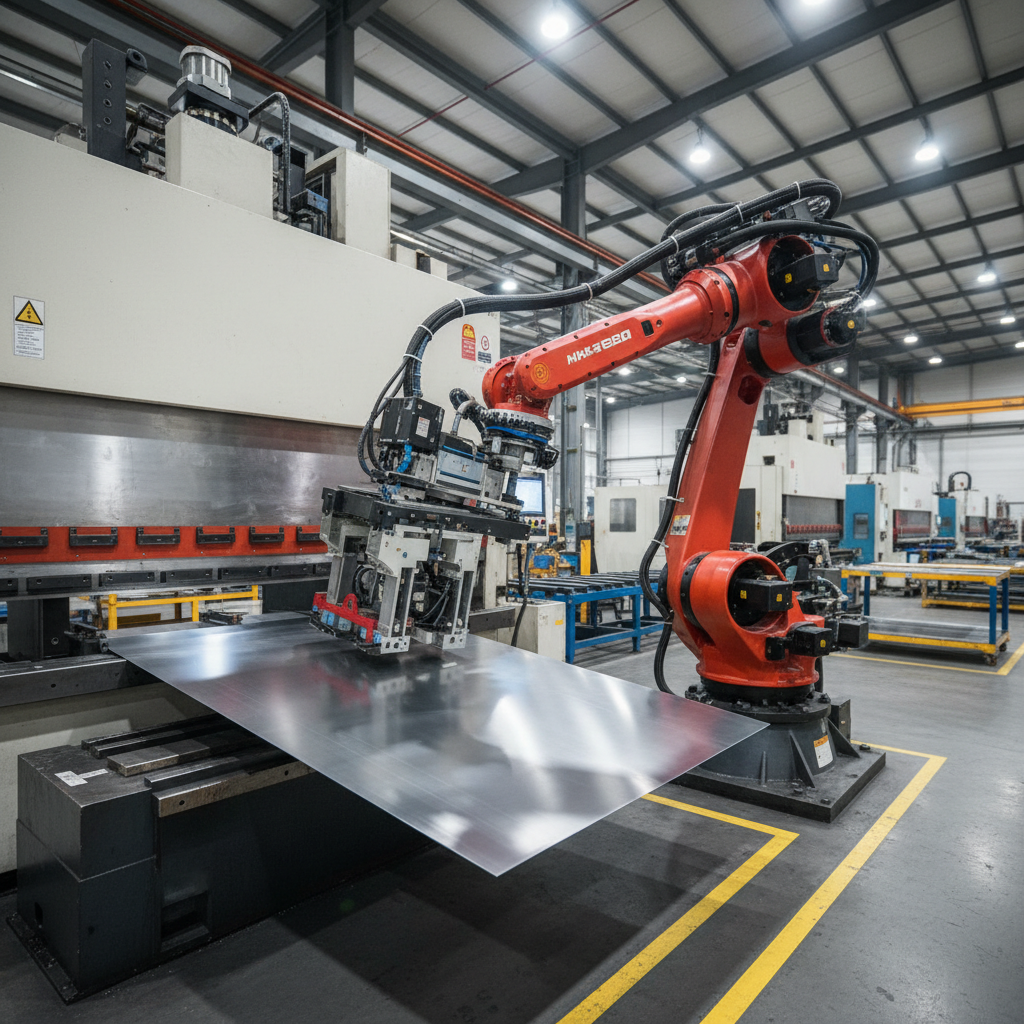
Automating laser-cut sheet handling for a press brake process with mixed-part batches and no dedicated runs
Throughput increase50%
Cycle (was 5 days)3 days
Compact footprint5×5m
No dedicated runs requiredMixed-batch
50%Throughput increase
3 daysCycle (was 5 days)
5×5mCompact footprint
Mixed-batchNo dedicated runs required
Vision-Guided CNC Machine Tending Cell

The Challenge

What the customer needed to solve

A general manufacturing facility needed to automate the material handling of laser-cut stainless steel sheets entering and exiting a press brake bending process. The requirement was to handle high part variation in size, weight, and bend geometry — including mixed-part batches with no dedicated runs of identical parts.

The system had to fit within a compact 5m × 5m footprint and pair with used press brake equipment already on site — not new machines. The throughput improvement target was 40–50% without increasing labour.

Design Constraints

What the engineering had to work around

  • High part variation in size, weight, and bend geometry across mixed batches
  • Positional accuracy required for bending alignment — no tolerance for misplacement
  • Used press brake machines with limited or no modern I/O interfaces
  • 5m × 5m maximum footprint — no room for a larger cell
  • 40–50% throughput improvement target without adding headcount

The Engineering

How ASHWAA approached the problem

A vision-guided robotic system was designed to identify, pick, and position a wide variety of sheet parts. The Keyence 3D vision system leverages the customer's existing CAD data for automated path generation — eliminating manual teach-in for each new part type and enabling true mixed-batch operation.

A magnetic gripper was engineered for reliable handling across the full sheet size range. A vibratory feeder bowl feeds housings to a rotary staging table, which presents parts to the robot and receives finished parts after bending. Siemens PLC provides synchronised communication with the press brake, including handshake signals for safe door open/close and cycle start.

The Solution

What was built and integrated

  • 01Industrial robot arm with magnetic gripper designed for sheet handling
  • 02Keyence 3D vision system for part recognition and orientation using customer CAD data
  • 03Vibratory feeder bowl and rotary staging table for part presentation and retrieval
  • 04Siemens PLC for synchronised communication with the press brake
  • 05Safety light curtains and area scanners for operator safety
  • 06Modular design for future scalability

The Result

Measurable outcomes after commissioning

  • Throughput increased from 3,000 parts in five days to three days — a 50% improvement
  • Consistency and accuracy of sheet positioning before bending improved significantly
  • Manual handling eliminated, enhancing worker safety and reducing ergonomic strain
  • Quick-change flexibility achieved for mixed-part batches without operator intervention
SPMAutomotive

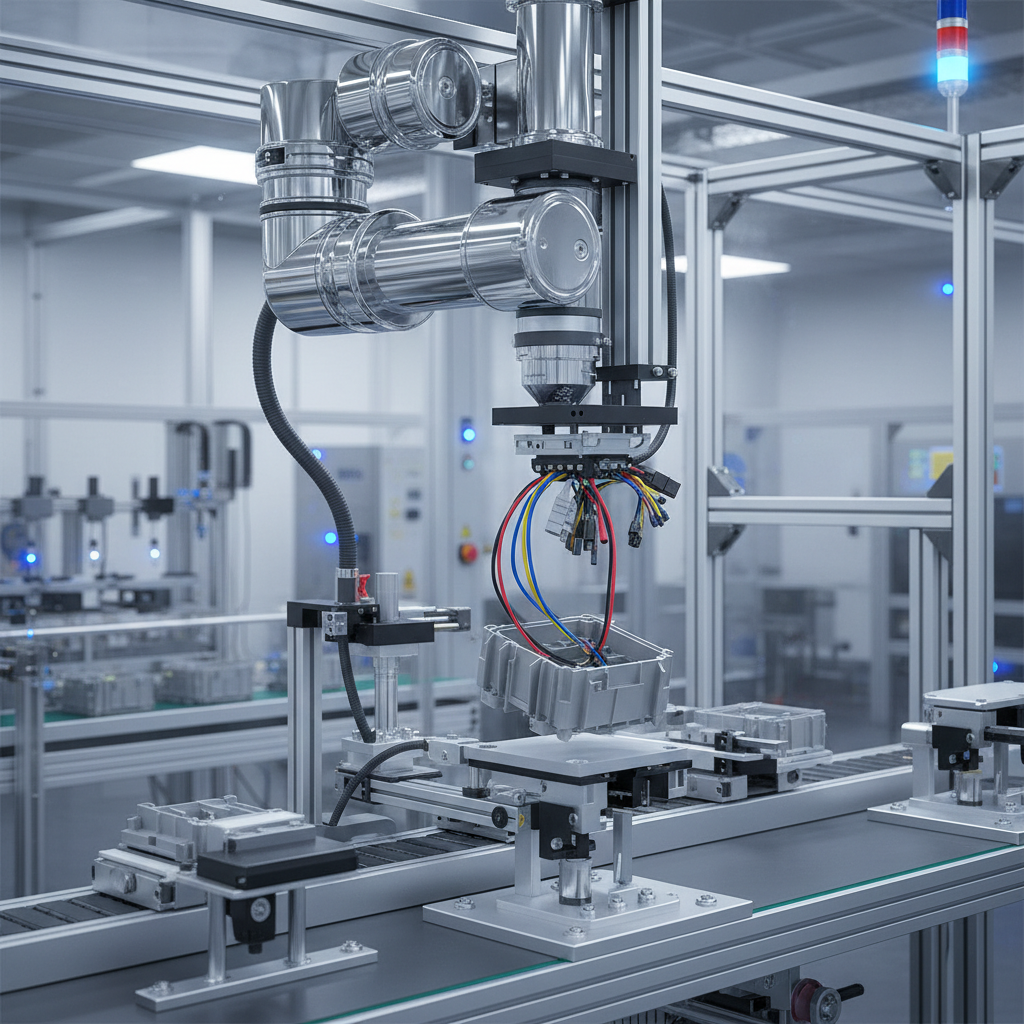
Electro-Mechanical Connector Assembly SPM

Automated assembly of stamped contacts into connector housings with hipot testing, vision inspection, and unattended multi-shift operation

Cycle time3 sec
OEE maintained95%
2nd & 3rd shiftsUnattended
In-line electrical verification100%
3 secCycle time
95%OEE maintained
Unattended2nd & 3rd shifts
100%In-line electrical verification
Electro-Mechanical Connector Assembly SPM

The Challenge

What the customer needed to solve

An automotive connector manufacturer needed to automate the assembly of stamped contacts into connector housings, integrating hipot electrical testing and vision-guided inspection in a single machine. The target was 95% OEE and a 3-second cycle time — a throughput improvement of 100% over the manual process without increasing labour.

The system needed to run unattended across 2nd and 3rd shifts, handle singulation of small contact geometry, maintain true position for defect-free assemblies, and achieve a compact layout. Developing tooling to run assemblies unattended in the 2nd and 3rd shifts was a core requirement.

Design Constraints

What the engineering had to work around

  • Singulation and handling of small, variable contact geometry
  • Maintaining true position and producing defect-free assemblies at 3-second cycle time
  • Developing tooling to run unattended in 2nd and 3rd shifts
  • Compact layout — floor space was limited
  • 100% throughput improvement target without increasing labour

The Engineering

How ASHWAA approached the problem

A robot arm with custom gripper was designed for precise contact insertion into the connector housing. The Keyence 3D vision system verifies true position and detects visual defects at each assembly step before the unit advances. A vibratory feeder bowl singulates contacts and feeds them to a rotary staging table, which presents housings and receives finished parts.

Die and insertion tooling was developed to maintain positional accuracy at 3-second cycle time. Hipot test was integrated in-line to enable 100% electrical verification of every assembly before packing. Allen Bradley or Siemens PLC provides synchronised control across all stations. Safety light curtains and area scanners allow the machine to run fully unattended.

The Solution

What was built and integrated

  • 01Industrial robot arm with custom gripper for contact insertion
  • 02Keyence 3D vision system for part recognition, true position verification, and defect detection
  • 03Vibratory feeder bowl and rotary staging table
  • 04In-line hipot test station for 100% electrical verification
  • 05Allen Bradley or Siemens PLC for synchronised control
  • 06Safety light curtains and area scanners for unattended operation

The Result

Measurable outcomes after commissioning

  • 3-second cycle time achieved as targeted
  • OEE maximised and maintained at 95%
  • Machine runs fully unattended across 2nd and 3rd shifts — doubling effective production capacity
  • 100% in-line electrical verification of every assembly achieved through integrated hipot testing
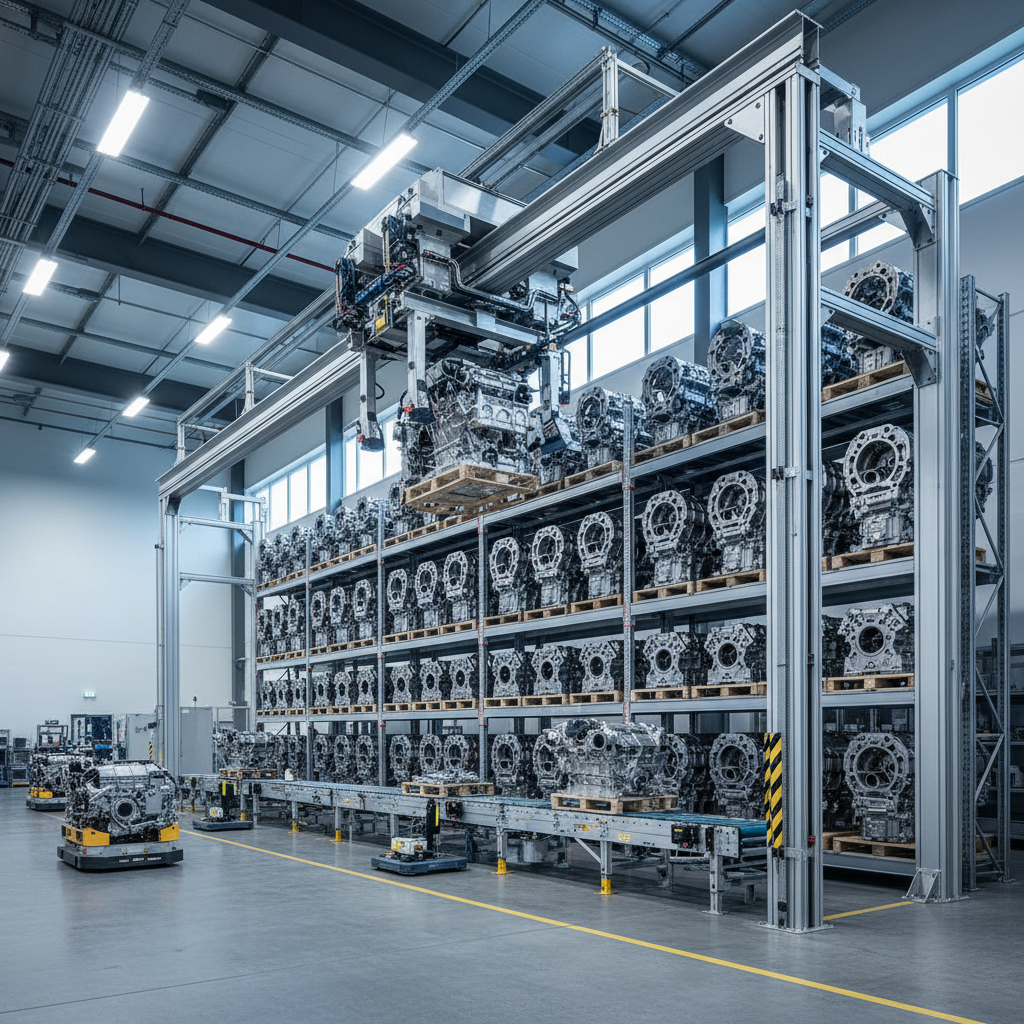
ASRS & GantryAutomotive

ASRS Engine Block Handling System Retrofit

Retrofitting an existing ASRS to handle two new engine block variants with high geometric variation — 1,800-block capacity and 100% OEE

OEE achieved100%
Block storage capacity1,800
Operator involvement0%
Universal tooling, no changeover2 variants
100%OEE achieved
1,800Block storage capacity
0%Operator involvement
2 variantsUniversal tooling, no changeover
ASRS Engine Block Handling System Retrofit

The Challenge

What the customer needed to solve

An automotive plant needed to retrofit an existing ASRS that had been handling an older, single-geometry engine block. A new engine programme introduced two variants with significantly higher geometric variation — unlike the older version which had uniform geometry. The existing system could not handle the new variants without modification.

The retrofit needed to maintain 100% OEE, handle both variants with universal tooling, operate fully unattended, and achieve this with minimal structural changes to the existing plant infrastructure.

Design Constraints

What the engineering had to work around

  • Universal grippers and nests required to handle both engine block variants without changeover
  • 100% unattended operation — no operator involvement in the handling process
  • Low clearances and retrofit constraint — minimal structural changes to the existing plant
  • Modular design required for future scalability to additional variants

The Engineering

How ASHWAA approached the problem

Universal grippers and nests were engineered to handle both engine block variants without changeover — a key constraint given the high geometric variation between the two. The complete conveying, gantry, and palletized storage system was designed to retrofit within the existing structural envelope, working around low clearances and existing plant infrastructure.

An integrated inspection and traceability system was built to track every engine block passing each station, providing full visibility of block location and status. Siemens PLC provides synchronised communication across the conveying, gantry, and storage subsystems. Safety light curtains and area scanners enable fully unattended operation.

The Solution

What was built and integrated

  • 01Complete retrofitted conveying, gantry, and palletized system for both engine block variants
  • 02Universal grippers and nests engineered for variant-agnostic handling without changeover
  • 03Integrated inspection and traceability system tracking every block at every station
  • 04Siemens PLC for synchronised communication across all subsystems
  • 05Safety light curtains and area scanners for fully unattended operation
  • 06Modular design for future scalability to additional engine variants

The Result

Measurable outcomes after commissioning

  • 100% operator involvement eliminated from the engine block handling process
  • OEE maximised and maintained at 100%
  • System stores 1,800 engine blocks and runs fully unattended for weeks
  • Both engine block variants handled with universal grippers and nests — zero changeover required
All Case Studies

READY TO DISCUSS YOUR PROJECT?

Tell us what you're trying to solve. We'll give you a direct engineering assessment — no sales pitch.